Two weeks and three days ago I was informed that there’s no full-time return offer for my summer internship. Standing right below the Washington Monument and ready to go to the top, my heart squeezed and shrinked. The hope has faded, and I have to search for jobs again, just like what I’ve done last year. Although I know this could happen, and I feel I’ve prepared, I’m still trying to refuse to admit the truth. In the same time, my friends already get multiple interviews, even offers, and I barely start.
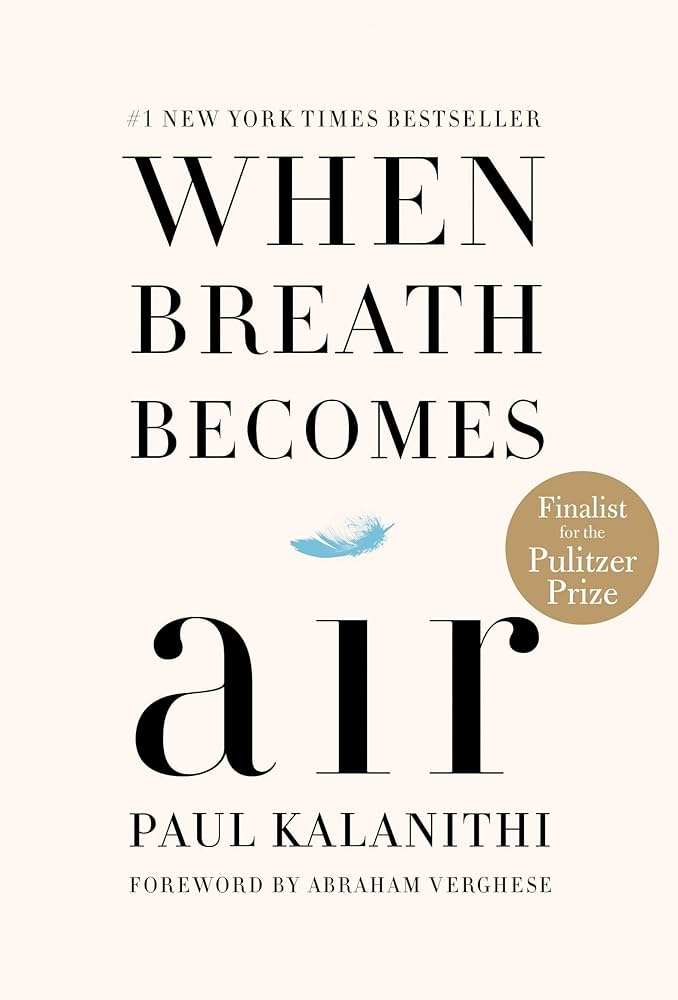
Luckily I got an interview a week ago, but I felt nervous and anxious about it. I didn’t know how to deal with my emotions. Talking to friends and family worked a little bit, but not much. One day I saw a Youtube video talking about the book “The ride of a lifetime” by Bob Iger. I won’t spend time reading a huge book like this, so I watched it and it was inspiring. After the video, I saw a video recommending “When breath becomes air”, and the title was “The book worth sharing again” (this is his second video on this book!). The title of the book and the video piqued my curiosity. What does “When breath becomes air” mean? I did a search and found out it was a book about Paul, a neurosurgeon and neuroscientist, who was diagnosed with cancer without any signs, reflecting on his life. Then I watched Lucy’s interview and decided to get this book.
I only spend a week of nights before bed finishing this book, which it usually take months. The reading experience was smooth. Even though there were lots of medical terms I didn’t know, it didn’t affect my reading experience.
The first part was briefly talking about his childhood, college, medical school, and mentioned he was diagnosed with cancer when his life was about to take off – fame, wealth, and a well-balanced work life. I like how he uses the poems, which added a scent of literature to the memoir.
The second part was the life he and cancer coexisted. It was so sincere when he put down his mental difference between being a doctor and being a patient. There are some parts of life you have to understand by experiencing.
What impressed me the most was how things happened so quickly. He was diagnosed with cancer, paused his job and started treatment, after a while it seemed that the cancer was controlled, he went back to work again. Few months later his cancer became worse, he left his job, his children were born, then he died. It only took two years. The change is too dramatic to process by me even until now.
I caught a that’s it? feeling after I finished the second part. It seems that the story didn’t end. Maybe this is how death approach us. Swift and silent.
Then Lucy’s epilogue made me weep. Medical details intertwined with emotional feelings, captured the truth of the last week of Paul’s life. Her miss of Paul touched my heart, made me think of all the families and relationships I’ve lost.
What does people left after death? Lucy said that Paul’s voice was strong and distinctive throughout the book, but the version of Paul she missed the most was the beautiful, focused man he was in his last year, writing this book – frail but never weak. I guess what people left is the spirit of striving.
I’m preparing interview tomorrow, I’ve tried several ways to cheer myself up, but not until I read this book, I saw his arduous, brusing work, and he never faltered. Paul’s experience reminds me what I have, gives me the courage to face the challenge. I can say I’m excited now.
“You can’t ever reach perfection, but you can believe in an asymptote toward which you are ceaselessly striving.” – Paul Kalanithi